Pest control service in Compton provides immediate structural and sanitary relief from active infestations compromising residential framing, electrical wiring, and food storage. Property owners facing pest emergencies near Compton Creek, along Rosecrans Avenue, or across Central Avenue receive targeted chemical-barrier applications, physical exclusion sealing, and nest extractions engineered for Los Angeles County architectural profiles.

Professional pest control service in Compton is an on-site structural and biological extermination discipline that eradicates wood-destroying insects, nocturnal rodents, and sanitary pests using targeted chemical barriers, physical exclusion, and species-specific mechanical removal.
Every service reflects the same meticulous attention to detail — whether it's a single job or a larger pest control service project across Compton.
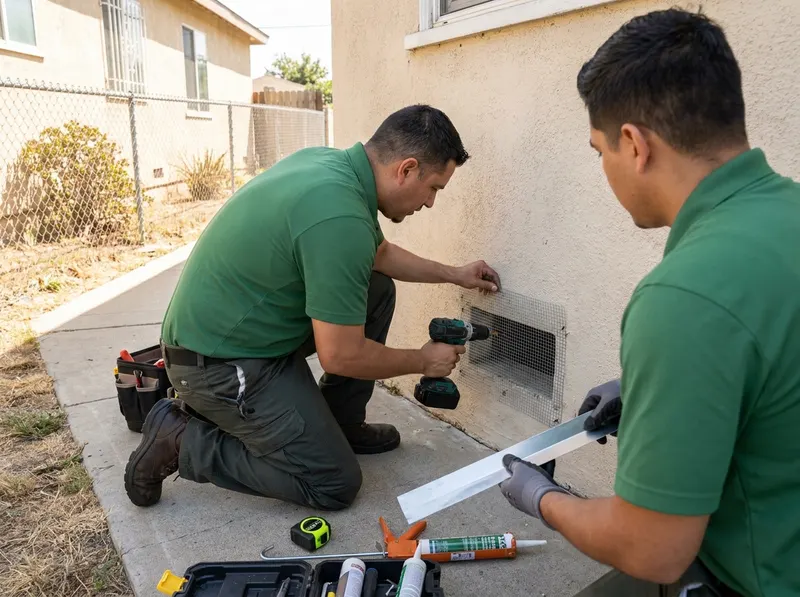
Roof rats, Norway rats, and house mice enter Compton properties through foundation crawlspace vents, damaged roof flashing, rake edges, and unsealed utility pipe penetrations. Technicians inspect crawlspaces, subfloors, and attic insulation zones to locate runways, gnaw marks, and sebum trails. Crews deploy tamper-resistant snap traps and mechanical capture stations inside active transit corridors, vacuum biological droppings with HEPA filtration units, and mechanically seal entry gaps larger than 1/4 inch using 19-gauge galvanized steel hardware cloth, stainless steel mesh, and heavy elastomeric sealants that rodents cannot chew through.
View details →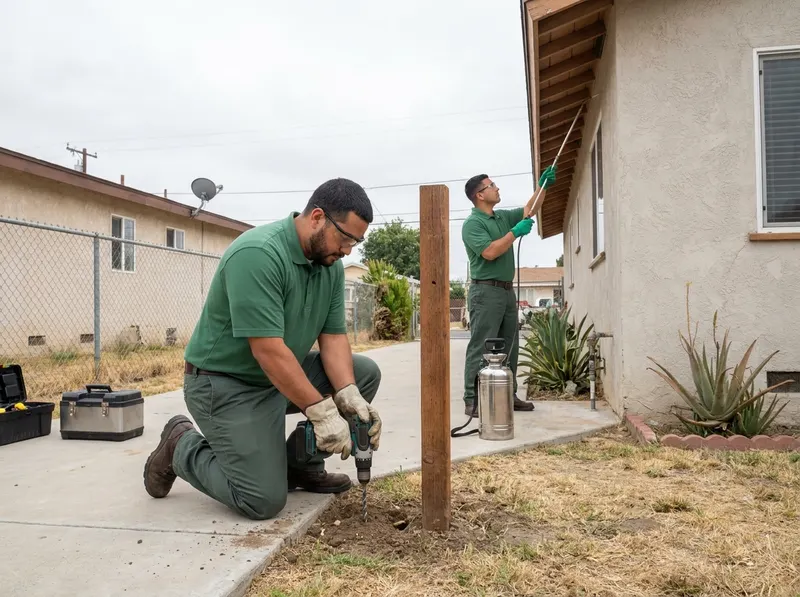
Subterranean and drywood termites compromise structural wood framing, load-bearing studs, and subfloor joists across older single-family homes throughout Rosewood and Sunny Cove. Eradication combines direct low-pressure liquid termiticide perimeter trenching into sub-slab soil with targeted borate wood injections and localized foam applications inside active galleries. Technicians drill precision access ports along concrete foundations where necessary, saturation-treating soil to disrupt subterranean colonies while applying desiccant dusts and localized heat remediation to eliminate isolated drywood termite pockets without mandatory whole-house tenting.
View details →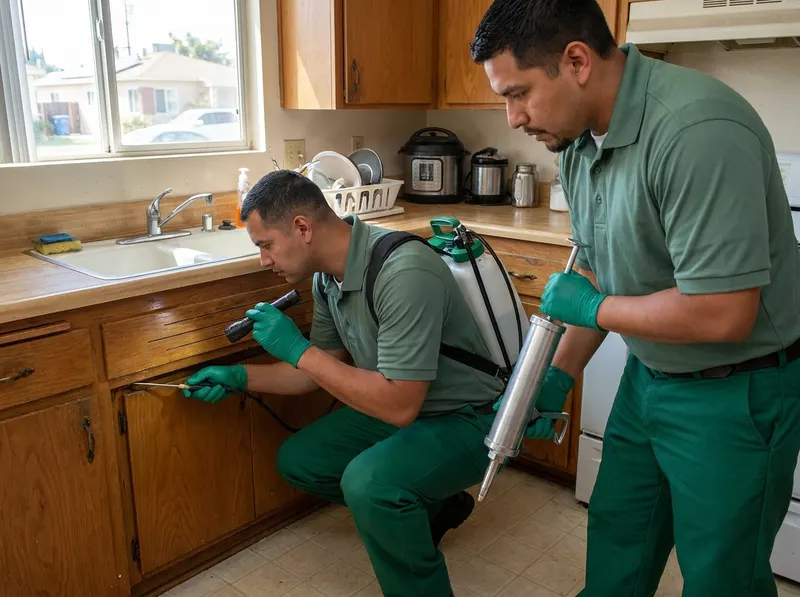
Cockroaches harbor behind kitchen refrigeration units, inside dishwashers, within wall voids surrounding plumbing stacks, and inside commercial floor drains, contaminating food preparation surfaces with pathogens and potent allergen proteins. Eradication utilizes precision gel bait matrices containing abamectin or indoxacarb, non-repellent residual insecticides, and insect growth regulators (IGRs) like pyriproxyfen to disrupt chitin synthesis across all nymphal stages. Technicians flush deep structural voids, place monitor boards to measure population decline, and target micro-crevices where adult females deposit oothecae.
View details →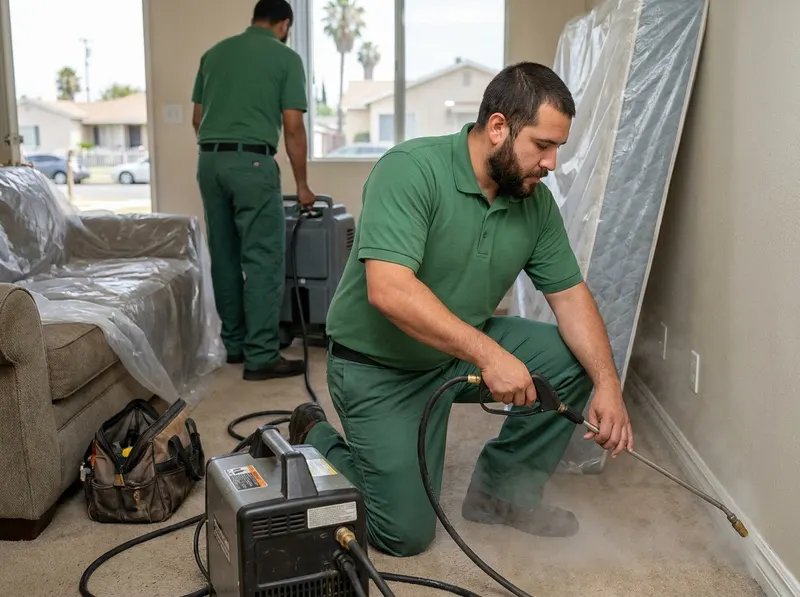
Cimex lectularius infestations inside mattress tufts, bed frames, baseboards, upholstered furniture, and electrical wall outlets require immediate lethal disruption. Eradication protocols deploy industrial high-output electric heat systems to elevate room ambient temperatures past the lethal thermal point of 122 degrees Fahrenheit alongside targeted contact insecticides and amorphous silica desiccant dusts applied inside hollow wall cavities. This integrated dual-method approach penetrates mattress seams, carpet tack strips, and baseboard crevices to destroy adult bed bugs, nymphs, and unhatched eggs in a single targeted intervention.
View details →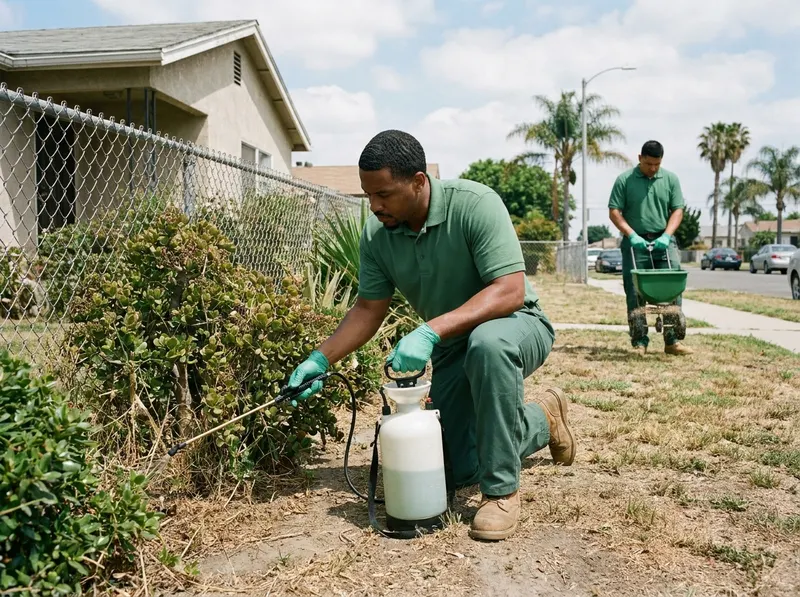
Eliminating indoor and outdoor flea and tick populations requires treating exterior turf grass, shaded dirt runs, livestock pens, and interior carpeting simultaneously. Technicians apply adulticides paired with juvenile hormone mimics across high-traffic zones to arrest larval development and break the 21-day flea reproduction cycle. Exterior treatments focus on shaded soil perimeters beneath patio decking and along property fence lines in Richland Farms, while interior applications penetrate carpet fibers and baseboard floor joints to eliminate emerging adult fleas before they latch onto domestic pets.
View details →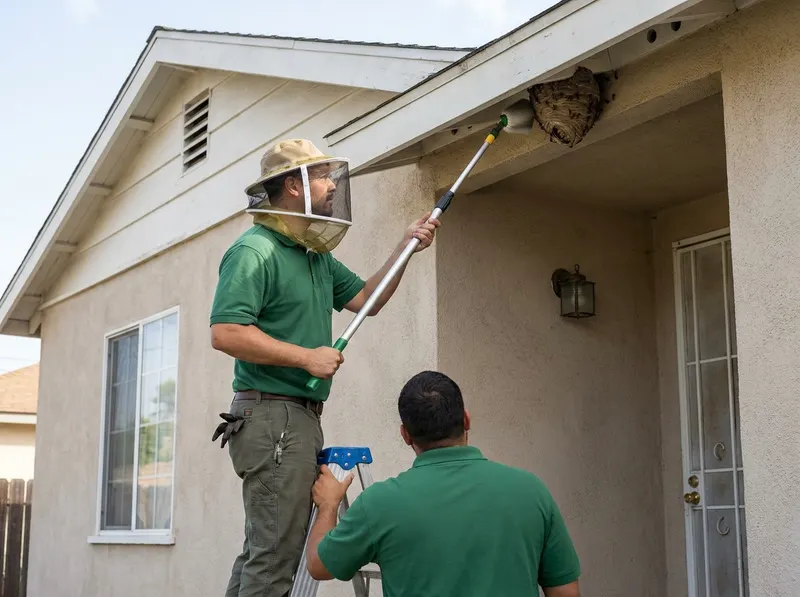
Paper wasps, mud daubers, and western yellowjackets construct aerial paper nests beneath roof eaves, inside attic vents, under patio covers, and inside subterranean soil burrows. Technicians apply rapid-knockdown freezing agents and low-toxicity pyrethroid formulations directly to nest openings, followed by complete mechanical removal of the physical nest structure. The surrounding attachment substrate is subsequently cleaned and coated with a residual repellent dust to eliminate lingering aggregation pheromones and prevent secondary colonies from rebuilding in identical structural locations.
View details →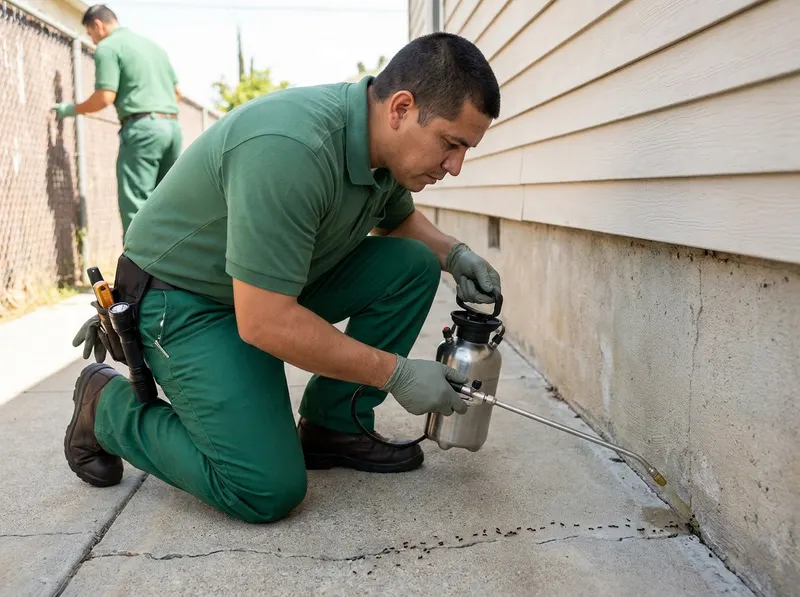
Prolonged dry summer heat and shifting soil moisture drive expansive supercolonies of Argentine ants indoors searching for plumbing moisture and sugar sources. Broadcast repellent sprays often trigger colony budding, dividing one infestation into multiple satellite nests; therefore, eradication relies on non-repellent transfer insecticides and delayed-action liquid borate baits. Foraging worker ants transport the active chemical formulation back through subterranean galleries to feed the reproductive queens, collapsing the central underground colony network within 10 to 14 days.
View details →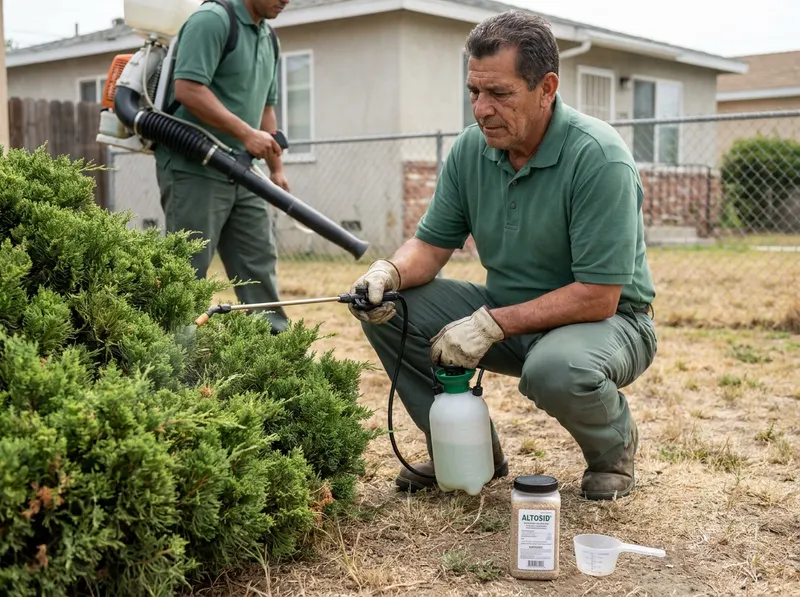
Standing water along storm drains, yard drainage catch basins, and unmaintained containers creates active breeding grounds for Culex and invasive Aedes mosquitoes across Los Angeles County. Technicians treat non-draining standing water sources with biological Bacillus thuringiensis israelensis (BTI) larvicides to destroy mosquito larvae before adult emergence. Shaded adult resting zones, including the undersides of broadleaf shrubbery, patio perimeters, and structural overhangs, are treated with ultra-low volume micro-encapsulated residual mists to knock down biting adult populations.
View details →Professional pest control service in Compton is an on-site structural and biological extermination discipline that eradicates wood-destroying insects, nocturnal rodents, and sanitary pests using targeted chemical barriers, physical exclusion, and species-specific mechanical removal.
You get a firm, itemized quote for your pest control service before any work begins — no surprises, no pressure.
Careful prep, tidy work, and a full cleanup when we are done. We treat your home and belongings like our own.
The same trusted, background-checked team from the first call to the final check.
If your home shows active structural wood damage, mud tubes along the raised foundation, or discarded alate wings on window sills near Kelly Park, choose subterranean termite eradication. If nocturnal activity manifests as scratching inside drywall, shredded attic insulation, or gnaw marks along electrical conduit near Compton Creek, choose targeted rodent exclusion and mechanical trapping. The trade-off between standard broadcast spraying and mechanical structural exclusion is longevity versus upfront labor: liquid perimeter barriers quickly suppress surface ant and spider activity for 30 to 60 days, whereas physical structural exclusion permanently closes access points against rats and mice but requires physical attic, crawlspace, and roof-line sealing. For multi-unit residential properties in Leland or East Rancho Dominguez, German cockroach baiting with insect growth regulators eliminates breeding colonies inside kitchen wall voids without dispersing insects into neighboring units, while severe structural bed bug infestations require localized thermal heat remediation combined with crack-and-crevice residual dusts. When outdoor spaces in Richland Farms harbor fleas or ticks due to livestock proximity, choose dual-action yard broadcast applications paired with indoor juvenile hormone mimics to disrupt the complete 21-day life cycle. If stinging insects establish subterranean or eave colonies near Wilson Park, choose targeted freezing aerosols combined with complete physical nest removal to eliminate immediate sting hazards. Commercial distribution facilities along Alameda Corridor require heavy-duty exterior bait stations and interior non-toxic monitoring grids to satisfy California sanitary health codes without disrupting logistics operations. Single-family homeowners seeking long-term perimeter defense should opt for quarterly barrier maintenance, which systematically re-establishes protective chemical boundaries before seasonal pest migrations penetrate living areas.
Every project gets a firm, written price after a free on-site visit. Ranges below for orientation.
Tell us about your pest control service job and we'll send a clear, written quote — usually the same day. Or just call and talk to a real Compton pro.

Properties bordering the concrete channels of Compton Creek face elevated roof rat and subterranean insect pressure due to natural riparian movement corridors intersecting dense residential grids. In agricultural-zoned pockets like Richland Farms, open animal housing, horse stalls, and unpaved corrals generate intense seasonal fly, tick, and rodent populations requiring reinforced perimeter defense and specialized larvicide applications. Meanwhile, post-war slab and raised-foundation homes built during the mid-twentieth century throughout Rosewood, Sunny Cove, and Leland experience subterranean termite swarming every spring as soil moisture shifts across southern Los Angeles County. The proximity of commercial transit hubs along the Alameda Corridor and major thoroughfares like Long Beach Boulevard and Artesia Boulevard contributes to localized pest migration patterns across light industrial and residential borders. High summer temperatures combined with dense multi-family residential housing near Downtown Compton accelerate German cockroach and bed bug breeding cycles inside plumbing walls and shared interior wall cavities, making professional physical exclusion and non-repellent chemical barriers an absolute necessity for lasting structural preservation.
 Trusted Pest Removal Services