Termite infestations in Compton present distinctly different challenges depending on the species invading the building envelope. Subterranean termites emerge directly from moisture-rich ground along Compton Creek and…
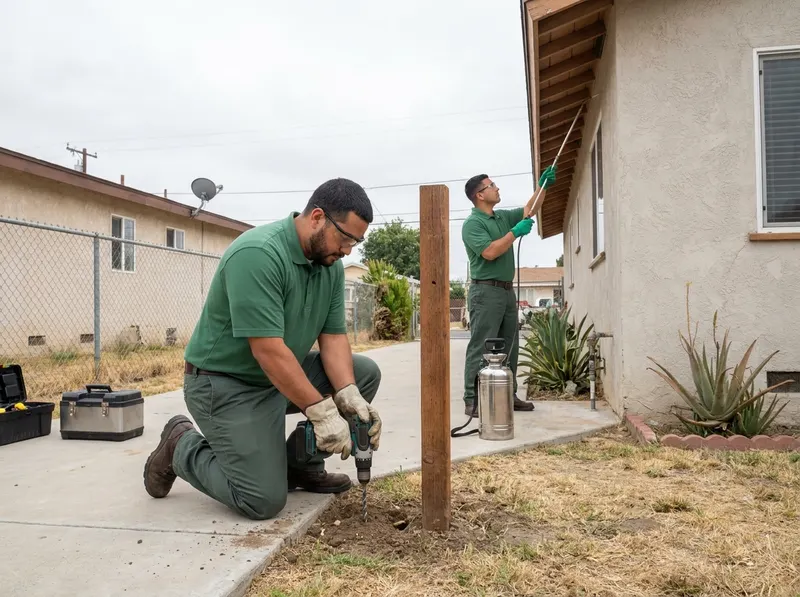
Termite infestations in Compton present distinctly different challenges depending on the species invading the building envelope. Subterranean termites emerge directly from moisture-rich ground along Compton Creek and residential plots in Richland Farms, building vertical mud shelter tubes across concrete foundations to reach structural floor joists. Conversely, drywood termites enter through attic vents, fascia boards, and exposed eaves across mid-century bungalows in Kelly Park, Rosewood, and Sunny Cove, excavating interior galleries directly inside dry framing lumber without needing ground contact.
Selecting the appropriate treatment protocol depends on an exact species diagnosis rather than generic chemical spraying. Localized spot treatments and direct wood-boring injections fit isolated drywood colonies in window headers or exposed rafters, preventing the disruption of whole-home fumigation when the damage is strictly confined. Subterranean colonies demand liquid non-repellent termiticide barriers trenched into the soil perimeter around slab edges and crawlspace piers in Leland and East Rancho Dominguez to eliminate subterranean colonies at the subterranean source.
Treatments follow California Integrated Pest Management standards to prioritize safety around indoor pets and residents while delivering lethal control to wood-destroying organisms. Technicians focus strictly on root-cause structural exclusion and targeted eradication, removing ongoing worry about structural compromise in Downtown Compton and Hacienda Village without high-pressure recurring maintenance contracts.
Every job gets a firm, written price after a free on-site visit.
Tell us about your subterranean & drywood termite control job in Compton and we'll send a clear, written quote — usually the same day.
 Trusted Pest Removal Services